The shelter opened the same way it did every morning.
Lights flicked on. Doors unlocked. Volunteers stepped inside carrying fresh water bowls and bags of food. The quiet building slowly filled with the familiar sounds of kennel gates and gentle voices greeting the dogs waiting inside.
Most of the dogs reacted immediately.
Some pressed their noses against the kennel doors, tails wagging as they watched the volunteers move down the hallway. Others barked softly, hoping someone might stop long enough to offer a scratch behind the ears.
But Cash didn’t move.
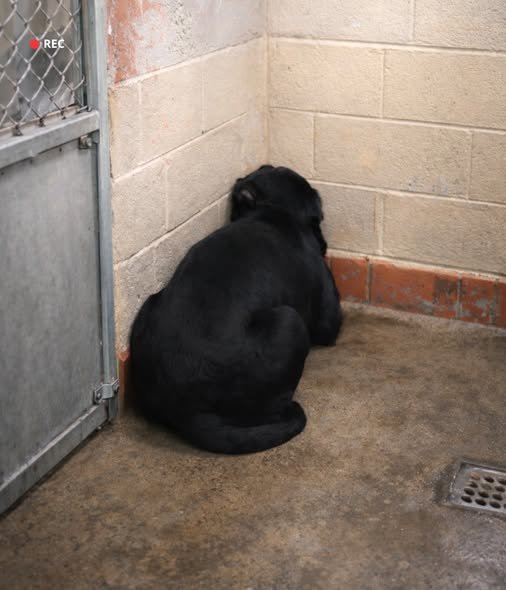
In the back corner of her kennel, the young Labrador stayed curled tightly into herself, her body angled toward the wall as if trying to become smaller.
She didn’t follow the footsteps outside.
She didn’t lift her head when someone paused near her kennel.
It was as if the safest thing she could do was disappear into stillness.
Cash had arrived at the animal shelter just a few days earlier alongside two other Labradors. The three dogs came in together, likely from the same place, but each of them reacted differently to the unfamiliar environment.
The other two dogs were cautious but curious.
They watched carefully when staff approached. Sometimes they wagged their tails hesitantly, unsure of the situation but still willing to hope that something good might happen.
Cash responded in the opposite way.
Every sudden noise made her flinch.
The sound of a bowl touching the floor.
The click of a kennel latch closing.
Even the simple rhythm of footsteps walking down the hallway made her tense, as if she were preparing for something unpleasant.
When someone tried to gently speak to her, she lowered her eyes and turned her face away.
She avoided eye contact completely.
The shelter staff didn’t know the details of her past. No one had been able to provide a clear history about where she came from or what her life had been like before arriving there.
But sometimes a dog’s body language tells a story all on its own.
Cash carried herself with the quiet caution of a dog who had learned that the world could be unpredictable.
There were faint signs that she had experienced hardship before arriving at the shelter. Nothing dramatic or obvious — just small details that hinted at a difficult past.
More telling than anything physical was the heaviness in her expression.
It was the look of a dog who had experienced too many uncertain moments.
Too many situations where trust hadn’t been rewarded.
One behavior concerned the volunteers the most.
Cash refused to eat when anyone was nearby.
The moment someone approached her kennel, she would retreat deeper into the corner and remain perfectly still. Even if her food bowl sat untouched just a few feet away, she wouldn’t move.
Only after the room emptied completely — when the shelter grew quiet and still — would she slowly approach the bowl.
Then she would eat quickly, glancing around as if expecting someone to appear at any moment.
It wasn’t stubbornness.
It wasn’t poor training.
It was protection.
Somewhere along the way, Cash had learned that being quiet, small, and unnoticed felt safer than taking a chance.
The shelter staff recognized the signs immediately.
Fearful shelter dogs are not uncommon in rescue work, especially when their past is uncertain. But each dog carries that fear in a slightly different way.
Cash’s way was silence.
The volunteers made a decision early on.
They wouldn’t rush her.
They wouldn’t force interactions or overwhelm her with attention. Instead, they would let her move at her own pace — even if that pace was slow.
Very slow.
They began adjusting the way they worked around her.
Voices became softer when they approached her kennel.
Movements were slower and more predictable.
Sometimes a volunteer would simply sit nearby on the floor without speaking, giving Cash the chance to observe without pressure.
They allowed her space to remain hers.
Days passed.
At first, nothing seemed to change.
Cash continued curling into the same corner each morning. She remained quiet, cautious, and distant from the activity happening around her.
But the volunteers understood something important about healing.
Progress with a fearful rescue dog often happens in tiny, almost invisible steps.
And then one morning, something small happened.
A volunteer named Maria had just finished placing fresh food in Cash’s kennel. Instead of walking away immediately, she quietly sat a few feet from the door, turning slightly sideways so she wouldn’t appear threatening.
She didn’t speak.
She didn’t move toward Cash.
She simply waited.
For several minutes, nothing happened.
Cash remained curled tightly against the wall.
But then, slowly… the dog lifted her head.
It was only a few inches.
Her eyes shifted toward the volunteer sitting quietly outside the kennel.
Maria stayed perfectly still.
The shelter hallway remained quiet.
After a moment, Cash did something the volunteers had never seen her do before.
She stood up.
Her movements were cautious and slow, like someone testing the ground beneath their feet.
Step by step, she approached the food bowl.
And for the first time since arriving at the shelter, she ate while someone was still in the room.
Maria felt her heart swell with emotion, but she didn’t react outwardly. She knew that even small excitement might frighten the timid Labrador.
So she simply stayed still and let Cash finish.
That tiny moment — barely noticeable to anyone passing by — meant everything.
Because it meant Cash had taken her first step toward trust.
From that day forward, small changes continued.
Cash began watching volunteers instead of avoiding them.
Her flinches became less frequent.
Sometimes, when a familiar staff member walked past, her tail would move ever so slightly against the kennel floor.
Weeks later, she even approached the front of her kennel when Maria arrived each morning.
The scared shelter dog who once tried to disappear into the corner was slowly discovering something new.
Safety.
Patience.
Kindness that asked for nothing in return.
Cash still had a journey ahead of her.
Trust, once broken, takes time to rebuild.
But every day inside that shelter, surrounded by gentle voices and patient hands, she was learning something she hadn’t known before.
Not every human brings fear.
Some bring healing.
And sometimes, the quietest dog in the room is simply waiting for someone patient enough to listen.