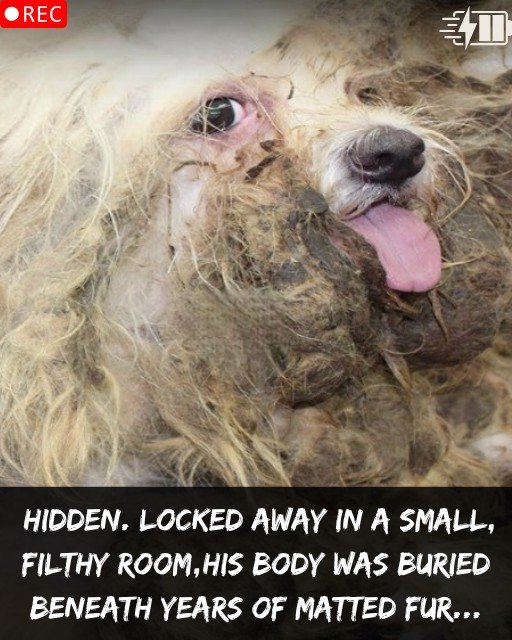
When rescuers first found Max, they didn’t see a dog.
They saw a trembling mass of tangled fur in the corner of a dark room.
It took a moment to realize he was alive.
One eye peeked through the thick, hardened mats. His tongue hung out slightly. He didn’t bark. He didn’t move much. He simply blinked — as if unsure whether the world still existed outside the filth that covered him.
Max had been locked away for years.
No grooming.
No walks.
No sunlight.
No affection.
Just silence.
And somehow, he had survived it.
The Hidden Pain of Severely Matted Fur in Dogs
To someone unfamiliar with animal care, matted fur may seem cosmetic — messy, perhaps uncomfortable, but not dangerous.
In reality, severe matting can be life-threatening.
When fur becomes tangled and compacted over time, it forms tight, solid masses against the skin. These mats:
-
Pull constantly on the skin, causing pain
-
Restrict blood circulation
-
Trap moisture and bacteria
-
Hide open wounds and infections
-
Limit mobility
-
Attract parasites
In extreme cases, mats harden like armor — but instead of protecting, they suffocate.
For Max, the mats were so thick they distorted his body shape. Dirt, debris, and likely fecal matter had been embedded for months, possibly years. Underneath, his skin was inflamed and raw.
This wasn’t neglect for weeks.
It was neglect measured in seasons.
The Rescue That Changed Everything
A concerned neighbor finally reported the situation after noticing the smell and lack of movement inside the property.
When animal welfare workers entered the room, they found Max confined in a small, filthy space. The air was heavy. The floor was unclean. There was no proper bedding.
And in the corner — almost blending into the shadows — was Max.
He didn’t growl.
He didn’t try to run.
He simply looked at them.
That look stayed with the rescuers. It wasn’t fear.
It was exhaustion.
They gently lifted him. The mats were so heavy that they shifted awkwardly as he moved. His tiny frame felt lighter than expected beneath all that fur.
He was rushed to a veterinary clinic immediately.
The First Shave: Revealing the Real Max
Veterinary teams prepared for a careful and emotional grooming process.
Because severe mat removal is painful, Max was sedated. Each hardened clump had to be shaved slowly and carefully to avoid cutting the fragile skin beneath.
As the mats fell away, the room grew quiet.
Underneath the heavy layers were:
-
Severe skin infections
-
Pressure sores
-
Open wounds hidden for who knows how long
-
Thin, underweight limbs
But also — a small white dog.
When the final mat was removed from his face, Max opened both eyes fully. Light touched his skin directly for what may have been the first time in years.
He looked smaller.
But he also looked free.
Healing Isn’t Just Physical
The days following his rescue were critical.
Max required:
-
Antibiotics
-
Anti-inflammatory medication
-
Nutritional rehabilitation
-
Medicated baths
-
Close monitoring
But beyond medical care, he needed something harder to measure: trust.
Dogs who endure long-term confinement often experience emotional trauma. They may become withdrawn, anxious, or fearful of touch.
At first, Max flinched at sudden movements.
He hesitated to step onto open floors.
He seemed confused by space.
But then something remarkable happened.
He began wagging his tail.
Slowly. Tentatively.
When caregivers entered the room, he followed them. He leaned gently into soft strokes. He allowed himself to rest near humans.
It was as if he was remembering what connection felt like.
The Power of Before and After
Transformation stories captivate people because they reflect something universal: redemption.
Max’s before-and-after images quickly spread online. The contrast was almost unbelievable. From an unrecognizable bundle of filth to a soft, white dog with bright eyes.
But the true transformation wasn’t cosmetic.
It was emotional.
He rediscovered play.
He learned to sleep comfortably.
He began responding to his name.
He became a dog again.
How Severe Neglect Happens — And How to Prevent It
Max’s story raises an important question: how does something like this happen?
Severe grooming neglect can stem from:
-
Owner mental health struggles
-
Financial hardship
-
Lack of education about long-haired breeds
-
Hoarding situations
-
Social isolation
But regardless of the cause, responsibility matters.
If you own a long-haired dog, regular grooming is not optional — it’s essential health care.
Basic Grooming Prevention Tips:
-
Brush long-haired dogs daily or several times per week
-
Schedule professional grooming every 6–8 weeks
-
Check behind ears, under legs, and around collars for early mats
-
Address small tangles immediately before they tighten
Early intervention prevents suffering.
A Forever Home at Last
Months after his rescue, Max looked like a completely different dog.
His fur grew back soft and clean. His skin healed. His body filled out to a healthy weight.
He began running.
Playing.
Exploring.
Eventually, a family saw his story and knew they wanted to give him what he had never truly had — a safe, loving home.
Today, Max sleeps on a warm bed instead of a dirty floor. He enjoys regular grooming sessions, belly rubs, and daily walks.
He is no longer hidden.
He is seen.
Why Max’s Miracle Matters
Stories like Max’s resonate because they show the power of intervention.
They remind us:
-
Suffering can hide behind closed doors.
-
Small acts of reporting can save lives.
-
Healing is possible — even after years of neglect.
Most importantly, they show that compassion is stronger than cruelty.
A Final Thought
When rescuers first saw Max, he was buried beneath years of silence.
But beneath that silence was a heartbeat still willing to trust.
His miracle wasn’t magic.
It was action.
If Max’s story moved you, consider supporting your local animal rescue organization, fostering a dog in need, or simply staying alert in your community.
Sometimes all it takes is one open door.
And sometimes, that door leads to a forever home.